The Blue Beetle
We were in South Africa for a friend's wedding, autumn of 2016 I think. Nine hours to kill at Johannesburg airport before the flight back to New York. Friends who lived there had warned us the city wasn't the safest, suggested we spend the layover in a mall. Eight hours of shopping sounded like a nightmare to us.
A man approached us near the gate. He said he could take us into Soweto and back before our next flight. We had no reason to trust him. We went anyway.
He was in his forties, grew up there, proud of it in the unforced way people are proud of a place that raised them. Sometimes I think about this man who approached us more than I think about the pictures I took there. None of it would have happened without him.
Soweto is not what the word suggests to people who have never been. It is not a synonym for misery. It is color first, before anything else. Houses painted the way people paint when they intend to be seen. Barbershops with murals for signs. Kids performing for no one and everyone at once. I had packed expectations of hardship and found dynamism instead, a place that seemed to generate its own special energy independent of what the rest of the world assumed about it.
He drove the broken roads like he'd memorized every pothole, pointed out landmarks, filled in histories we barely knew. We saw Mandela's house, the one he came back to after Robben Island. Small, ramshackle, family things still in it, the kind of building that makes history feel domestic instead of monumental.
We asked him to take us to lunch, but not in the touristy place, we wanted somewhere real. He brought us where he would have gone. A hole in the wall that looked more like a garage than a restaurant. Offal stew, brains and liver and lung, served over something like polenta. It was excellent.
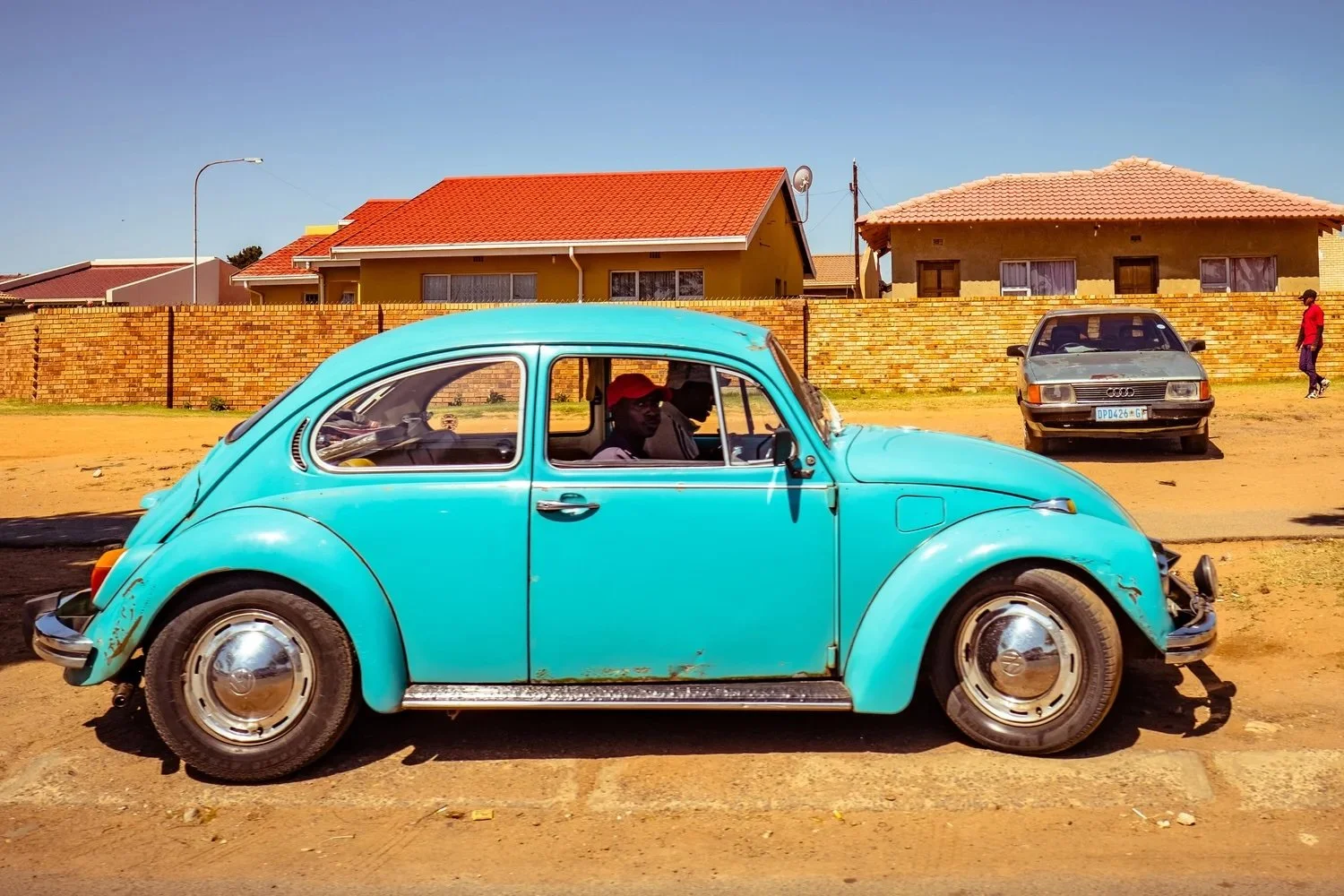
Just after lunch, still moving slowly because the streets in Soweto don't let a car go fast, I shot most of the series out the window. That's usually not how I work, but you need to adapt. Gut instinct, no setup.
A blue car sat on the side of the road, two guys inside it, not going anywhere, maybe pretending to drive, maybe just killing time the way we were killing time before our flight. The car might not have even run. It didn't matter. Against the beige of the houses behind it, that blue did something the whole afternoon had been doing without me quite naming it.
Soweto isn't a poor place performing poverty for visitors. It's a place making its own culture, on its own terms, not measuring itself against Johannesburg or anywhere else.
Years later a jazz label in Italy put that frame on an album cover. Somewhere in there The Guardian wrote about that picture too. The photograph started traveling to places I hadn't planned for it, the way the good ones sometimes do.
But none of it is the real story, though. The real story is that some days before I took it, I asked Jennie to marry me. Surrounded by Baboons on the cliffs of Cape of Good Hope. I know, right?
She said yes.
Everything after that, the guide, the house, the stew, the blue car going nowhere, happened to two people who had just decided to spend the rest of their lives together. Soweto got folded into that decision without either of us asking it to. I don't think you get to choose which places end up meaning something. They just do, and then years later a photograph turns up on a record sleeve to remind you.
Il Maggiolone Blu
Eravamo in Sudafrica per il matrimonio di un amico, autunno 2016 credo. Nove ore da ammazzare all'aeroporto di Johannesburg prima del volo di ritorno a New York. Amici che vivevano lì ci avevano avvertito che la città non era delle più sicure, ci avevano suggerito di passare lo scalo in un centro commerciale. Otto ore di shopping ci sembravano un incubo.
Un uomo ci si avvicinò vicino al gate. Disse che poteva portarci a Soweto e riportarci indietro in tempo per il volo successivo. Non avevamo nessun motivo per fidarci. Ci siamo andati lo stesso.
Aveva una quarantina d'anni, era cresciuto lì, orgoglioso del posto nel modo naturale con cui la gente è orgogliosa del luogo che l'ha cresciuta. A volte penso a quest'uomo che ci si avvicinò più di quanto penso alle foto che scattai lì. Niente di tutto questo sarebbe accaduto senza di lui.
Soweto non è quello che il nome suggerisce a chi non c'è mai stato. Non è un sinonimo di miseria. È colore, prima di tutto il resto. Case dipinte come si dipinge quando si vuole essere visti. Barbieri con murales al posto delle insegne. Bambini che si esibiscono per nessuno e per tutti allo stesso tempo. Avevo messo in valigia aspettative di durezza e ho trovato dinamismo, un posto che sembrava generare una propria energia particolare, indipendente da quello che il resto del mondo dava per scontato su di esso.
Guidava sulle strade dissestate come se avesse memorizzato ogni buca, indicava punti di riferimento, riempiva vuoti di storie che conoscevamo appena. Abbiamo visto la casa di Mandela, quella dove tornò dopo Robben Island. Piccola, malmessa, ancora piena di oggetti di famiglia, il tipo di edificio che rende la storia domestica invece che monumentale.
Gli abbiamo chiesto di portarci a pranzo, ma non nel posto per turisti, volevamo qualcosa di vero. Ci ha portato dove sarebbe andato lui. Un buco che sembrava più un garage che un ristorante. Uno stufato di frattaglie, cervella, fegato e polmone, servito su qualcosa che assomigliava alla polenta. Ottimo.
Subito dopo pranzo, muovendoci ancora lentamente perché le strade di Soweto non permettono a un'auto di andare veloce, ho scattato la maggior parte della serie dal finestrino. Di solito non lavoro così, ma a volte bisogna adattarsi. Istinto puro, nessuna preparazione.
Un'auto blu era ferma sul ciglio della strada, due tizi dentro, non andavano da nessuna parte, forse fingevano di guidare, forse ammazzavano il tempo come lo stavamo ammazzando noi in attesa del volo. Forse quell'auto non funzionava nemmeno. Non importava. Contro il beige delle case sullo sfondo, quel blu faceva quello che tutto il pomeriggio stava già facendo senza che io riuscissi a definirlo con precisione.
Soweto non è un posto povero che recita la povertà per i visitatori. È un posto che crea la propria cultura, alle proprie condizioni, senza misurarsi con Johannesburg o con nessun altro posto.
Anni dopo una etichetta jazz Italiana scelse quello scatto per la copertina di un album. Da qualche parte in mezzo a tutto questo The Guardian scrisse anche di quella foto. La fotografia ha cominciato a viaggiare verso posti che non avevo previsto, come fanno a volte quelle buone.
Ma niente di tutto questo è la storia vera. La storia vera è che qualche giorno prima di scattarla avevo chiesto a Jennie di sposarmi. Circondati dai babbuini sulle scogliere di Cape of Good Hope. Assurdo, vero?
Lei disse sì.
Tutto quello che è venuto dopo, la guida, la casa, lo stufato, l'auto blu che non andava da nessuna parte, è successo a due persone che avevano appena deciso di passare il resto della vita insieme. Soweto si è infilato dentro quella decisione senza che nessuno dei due glielo chiedesse. Non credo che si scelga quali posti finiscono per contare qualcosa. Semplicemente succede, e poi anni dopo una fotografia spunta sulla copertina di un disco a ricordartelo.